
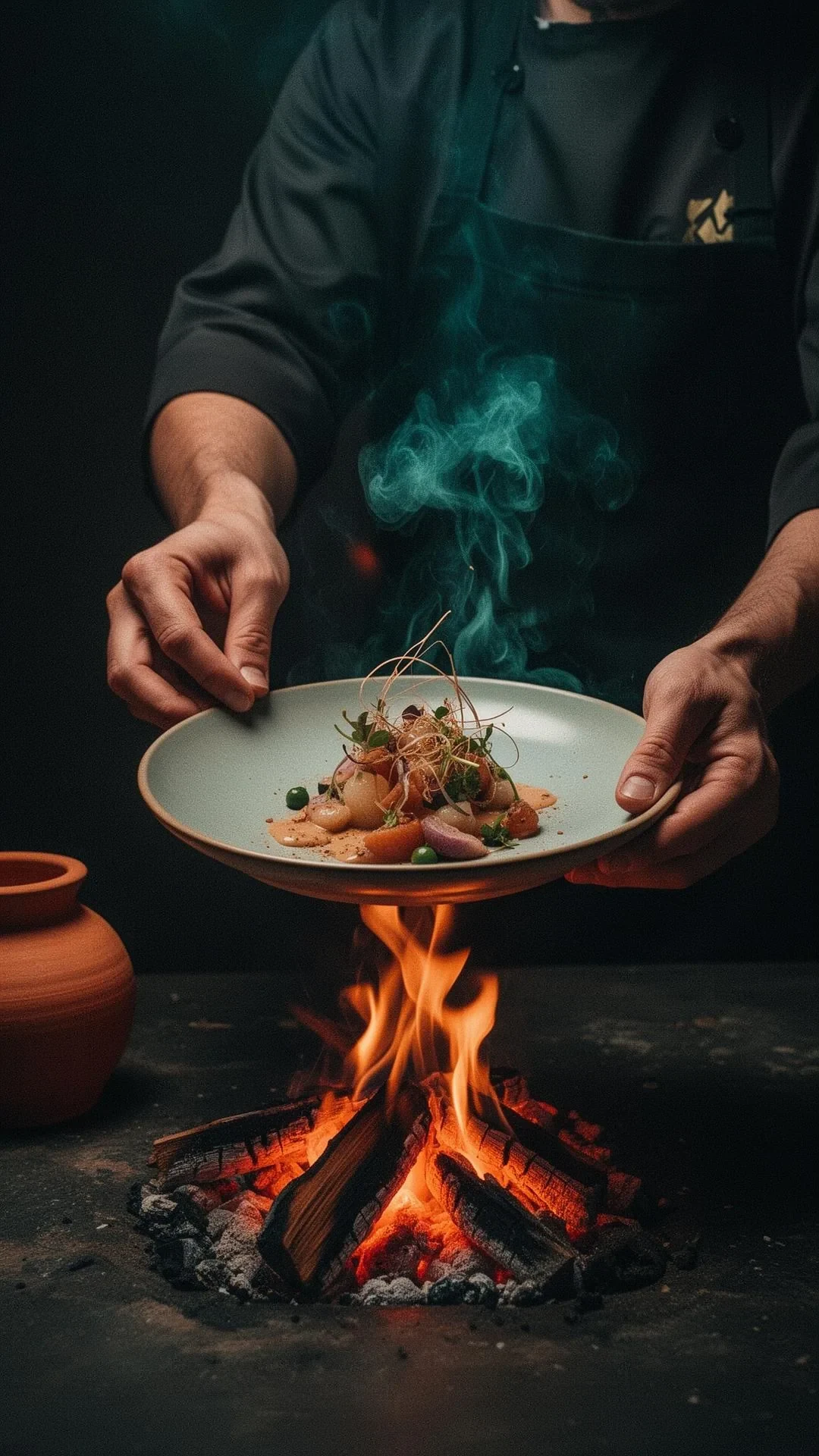
An unfamiliar ingredient, the sound of a hot pan, a drink built around an unexpected flavour: discovery at the table often begins with something small. It does not need an elaborate performance. It needs a moment that makes a guest pause, pay attention and ask a question. That attention is a useful starting point for a different kind of dining experience.
The Curio Table begins with the idea that food can connect with science, arts, theatre, design, games and craft. Its organising thoughts are mood, methods and memories. Mood concerns how an experience feels. Methods make ingredients and transformation interesting. Memories connect what is served with the stories and people around the table.
Those ideas become tangible through its live kitchen, zero-proof bar, mystery dining and Curio Lab. They are not interchangeable attractions. Each invites a different kind of engagement: observing a technique, exploring a flavour, questioning an assumption or discovering a process. Food remains the medium that holds the experience together.
Mystery dining is a particularly useful example. Delaying the reveal of a dish can draw attention away from a familiar label and towards texture, aroma and taste. But surprise is only worthwhile when the guest feels safe. Dietary needs and clear communication remain essential. Curiosity should open an experience to more people, not turn uncertainty into discomfort.
The same principle applies to the zero-proof bar. Removing alcohol does not mean removing intention. Ingredients, balance, temperature, presentation and the relationship with food can give a drink its own point of view. The opportunity is to create something people actively choose, rather than treating it as an afterthought for those who are not drinking.
For collaborators, this creates room for genuine exchange. A maker might illuminate a process; an artist might change the way a meal is encountered; a chef might explore a technique through a new ingredient. The strongest collaborations start with an idea that belongs at the table, rather than a list of names assembled around it.
There is an operating discipline behind that freedom. An experience must be understandable to guests, executable by the team and repeatable without feeling mechanical. A compelling one-off evening does not, by itself, establish a scalable format. Learning which elements guests value, which they return for and which the team can deliver consistently is part of the creative work.
For Sandhi, curiosity is therefore not a substitute for restaurant fundamentals. It is a way to build on them. Good food, considerate service and a clear welcome make experimentation possible. When those foundations hold, the table can become more than the place where a meal arrives: it can become the place where a new interest begins.
Discovery works best when the guest feels invited, not tested.Back to stories